- Name
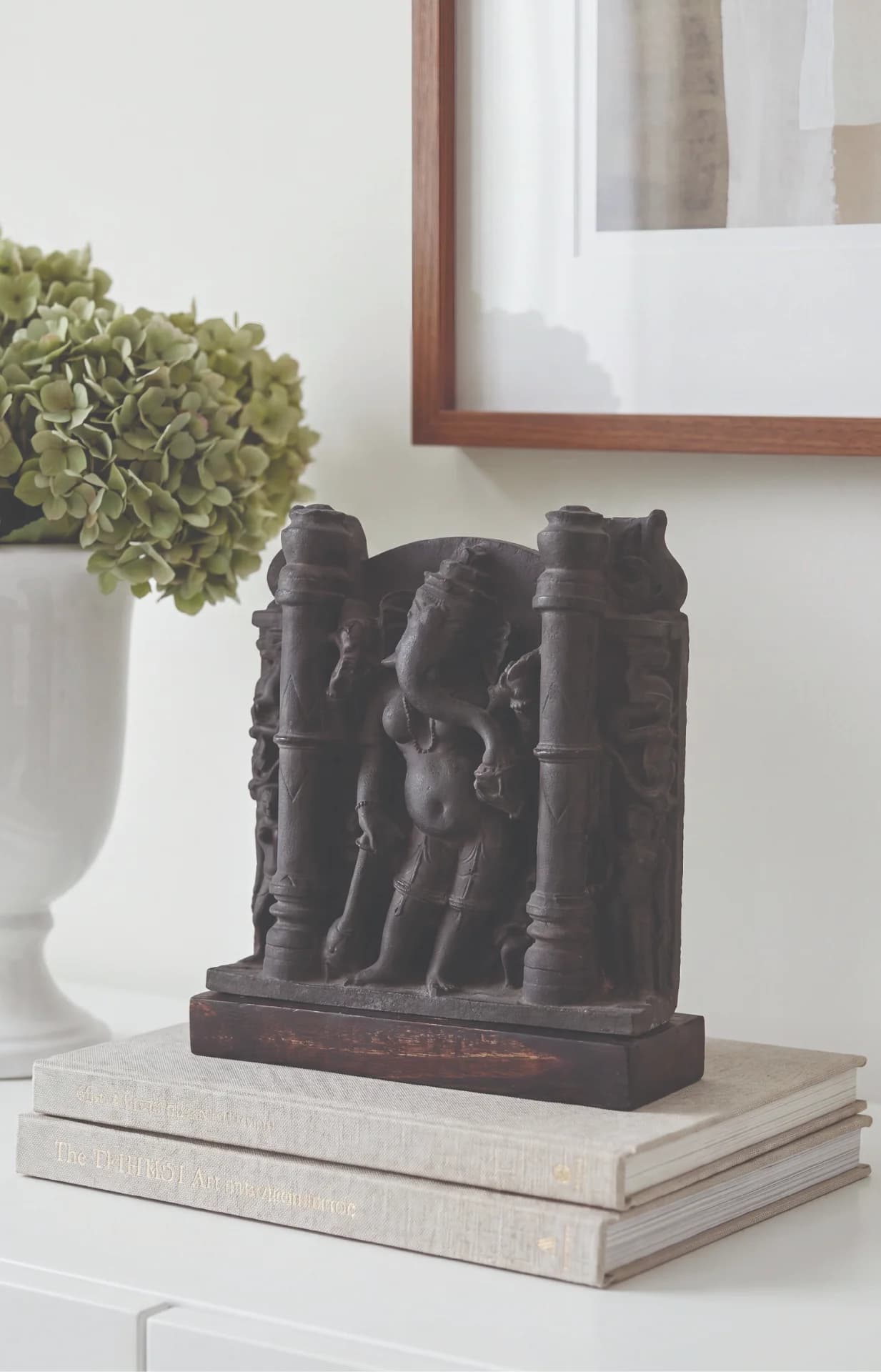
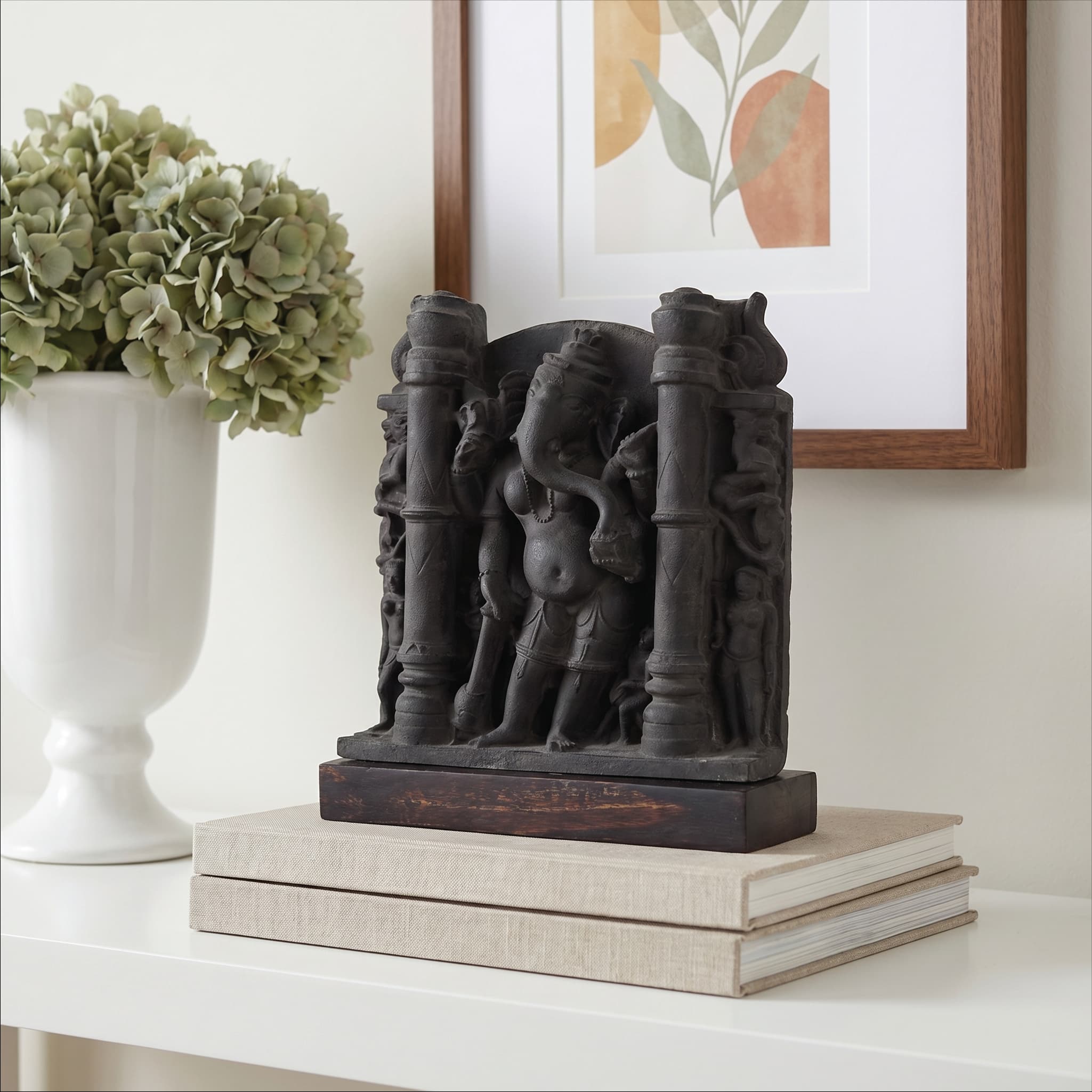
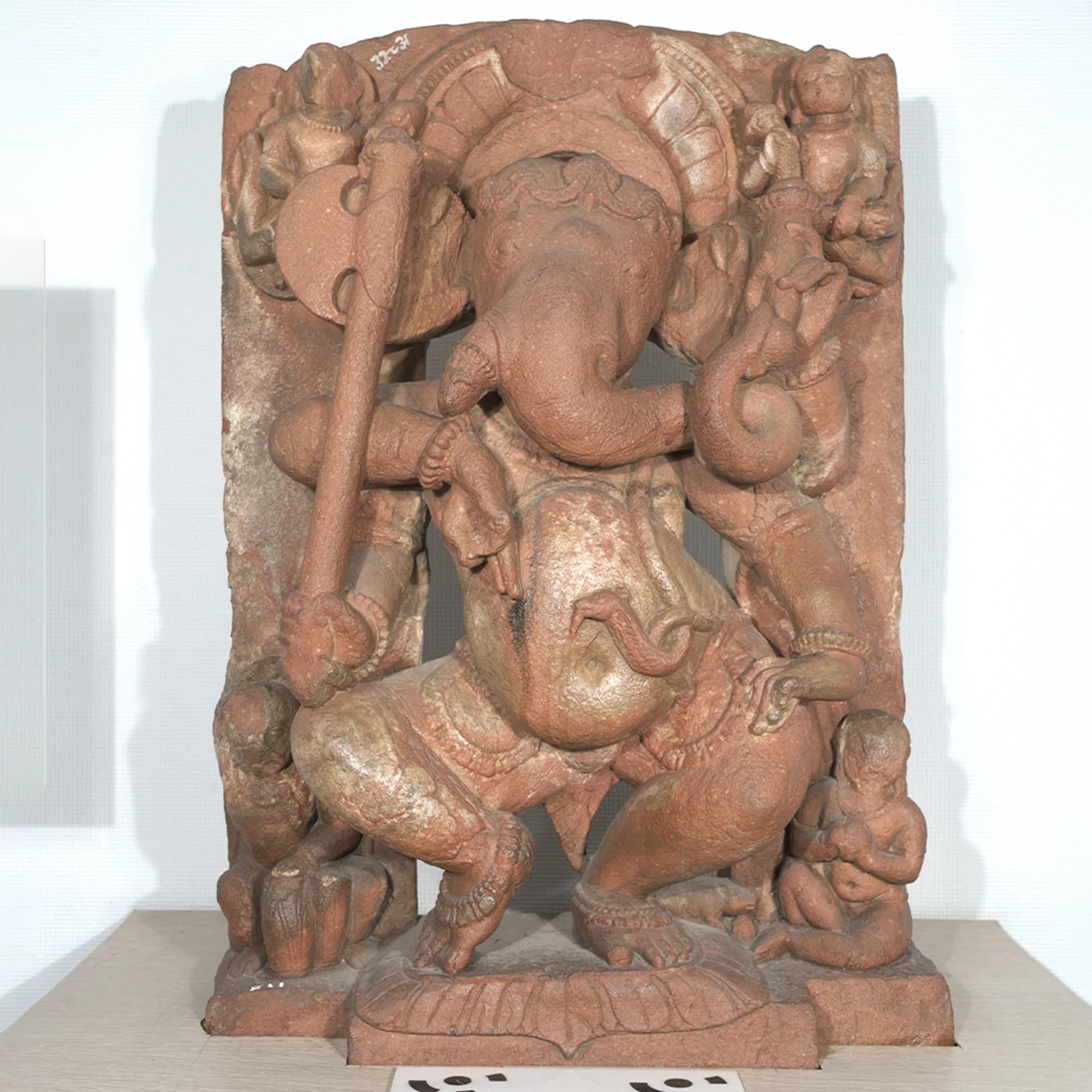
- Ganesha
- Origin
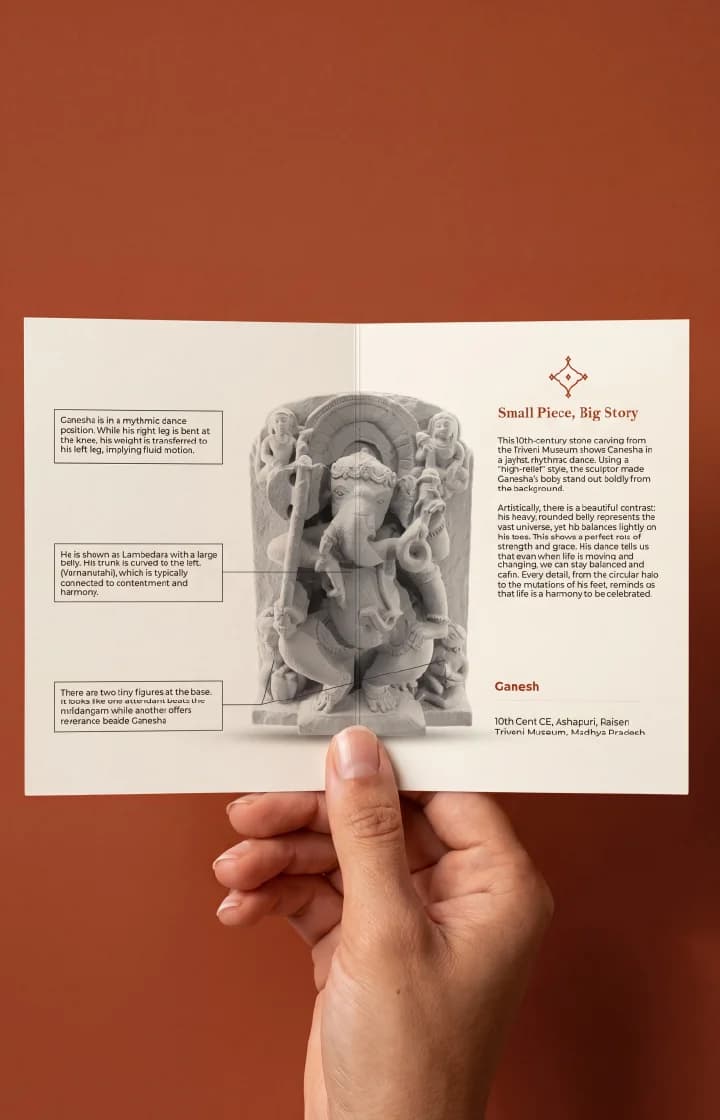
- 10th Century CE, Ashapuri, Raisen
- Currently at
- Triveni Museum, Madhya Pradesh, India
About this piece
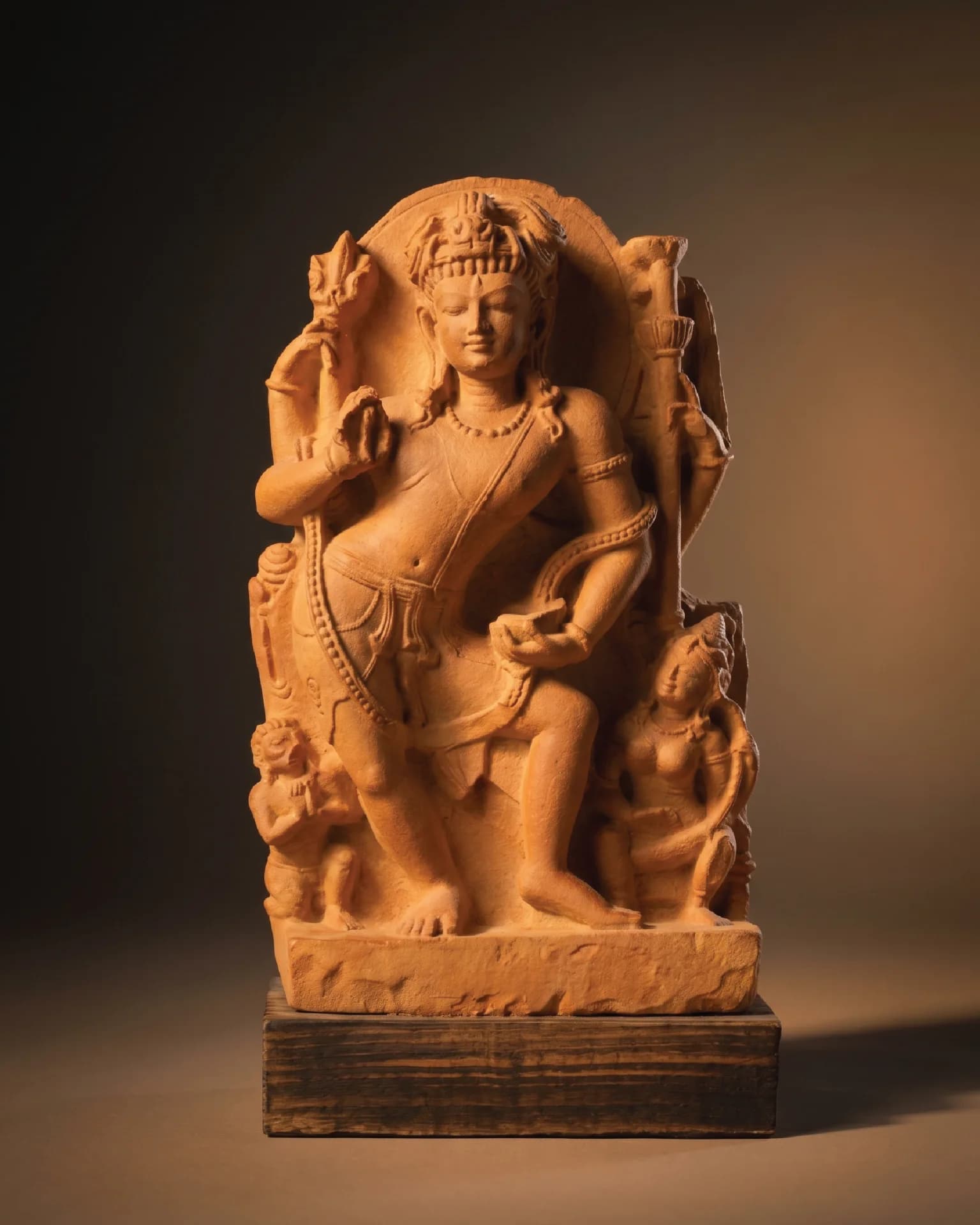
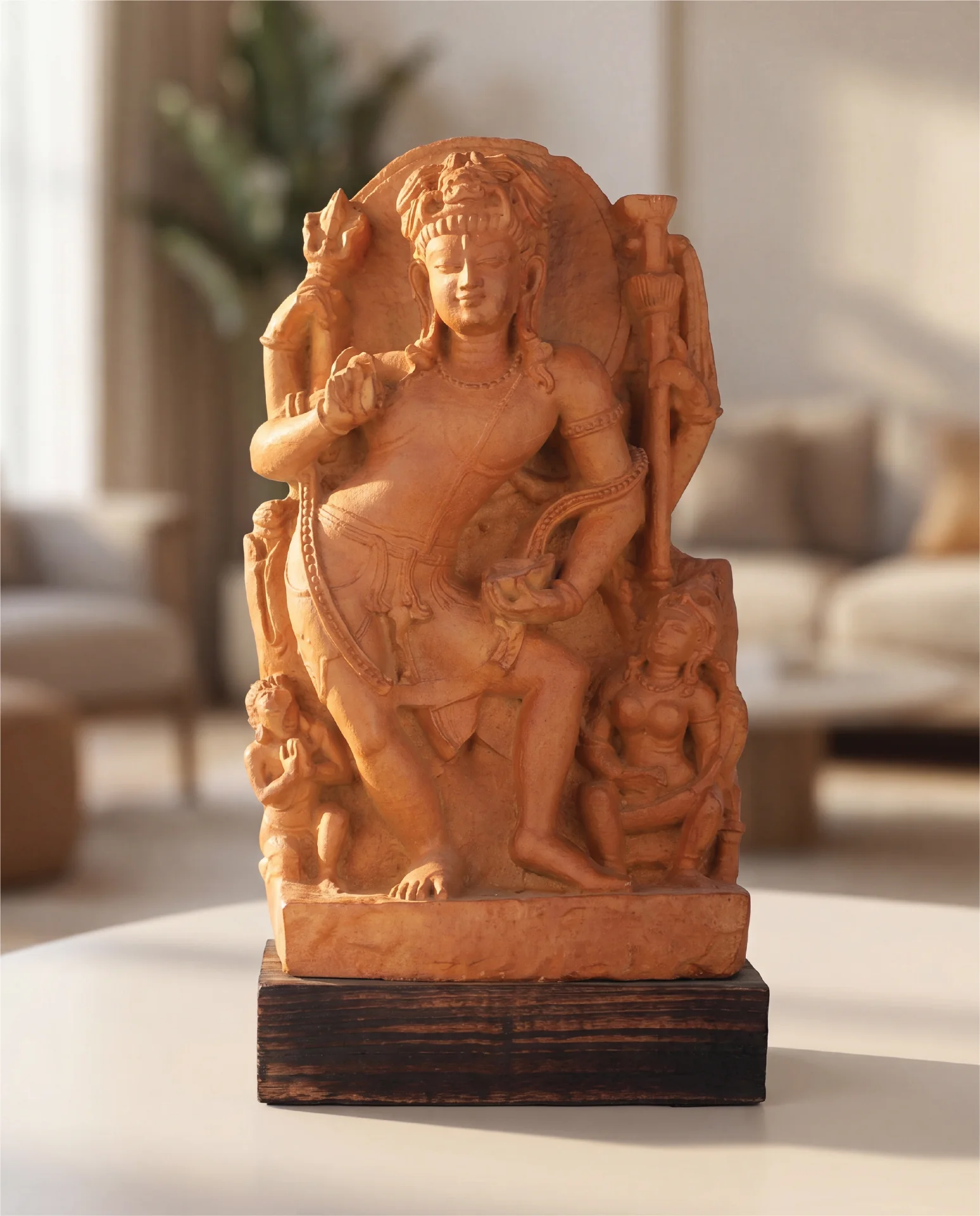
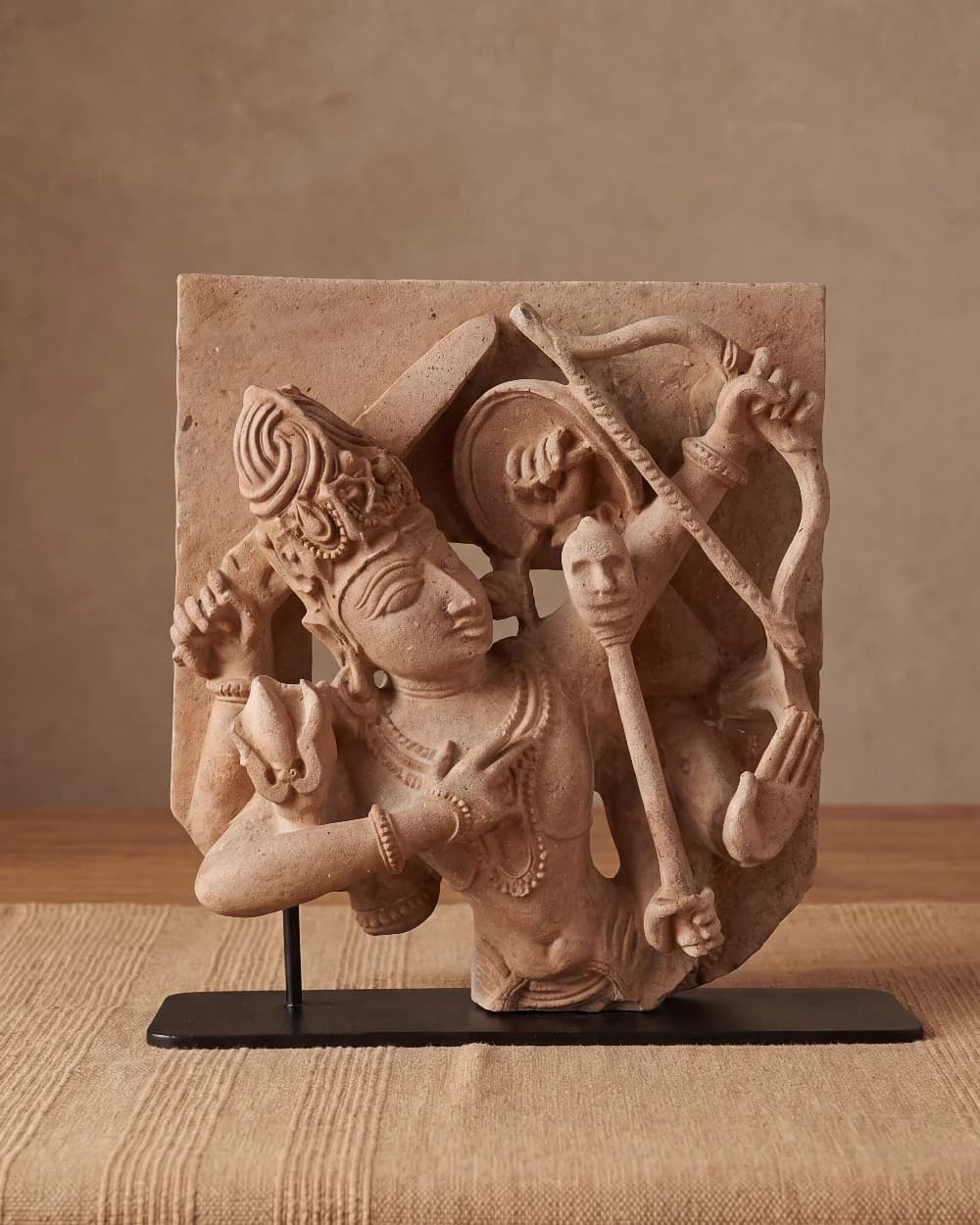
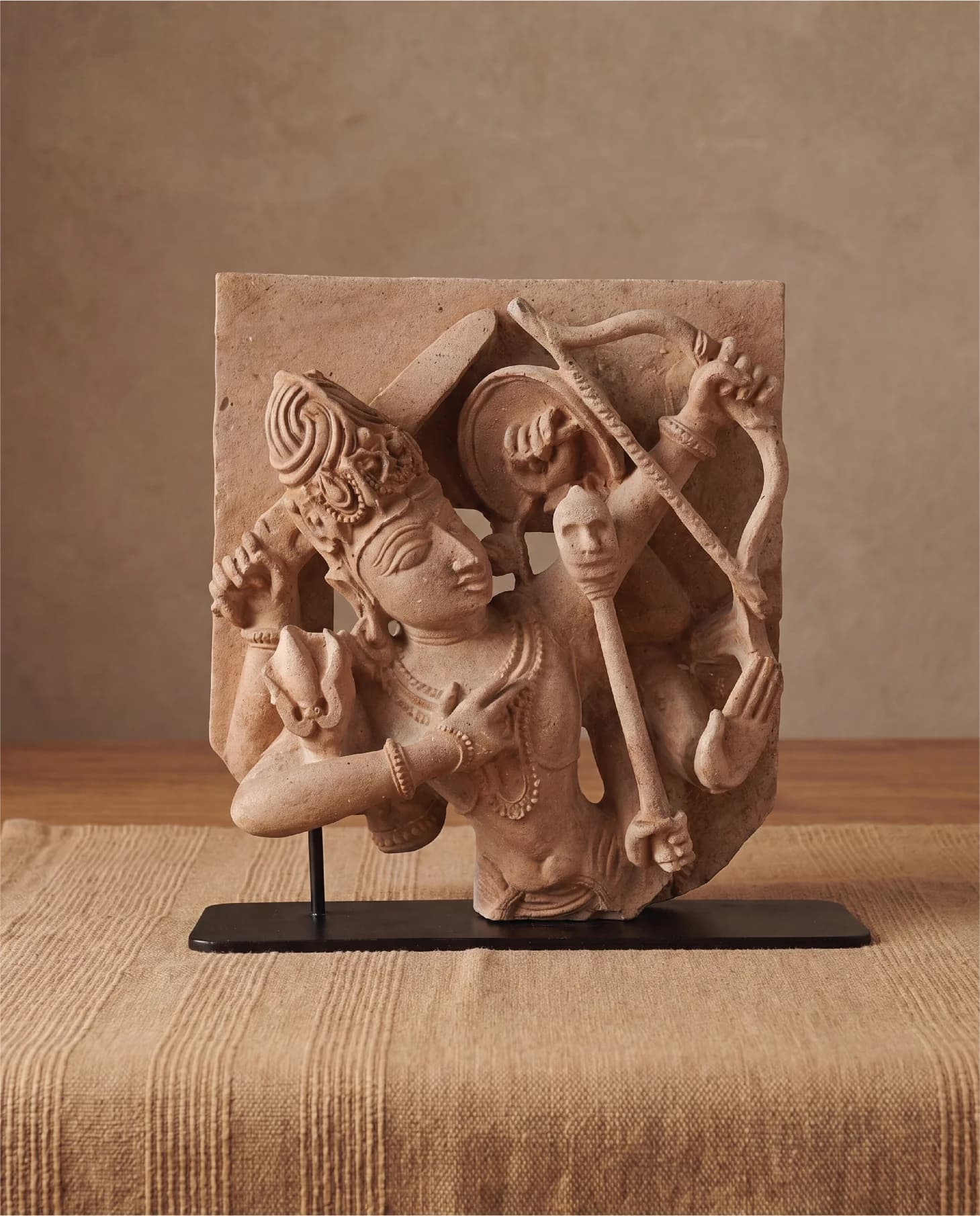
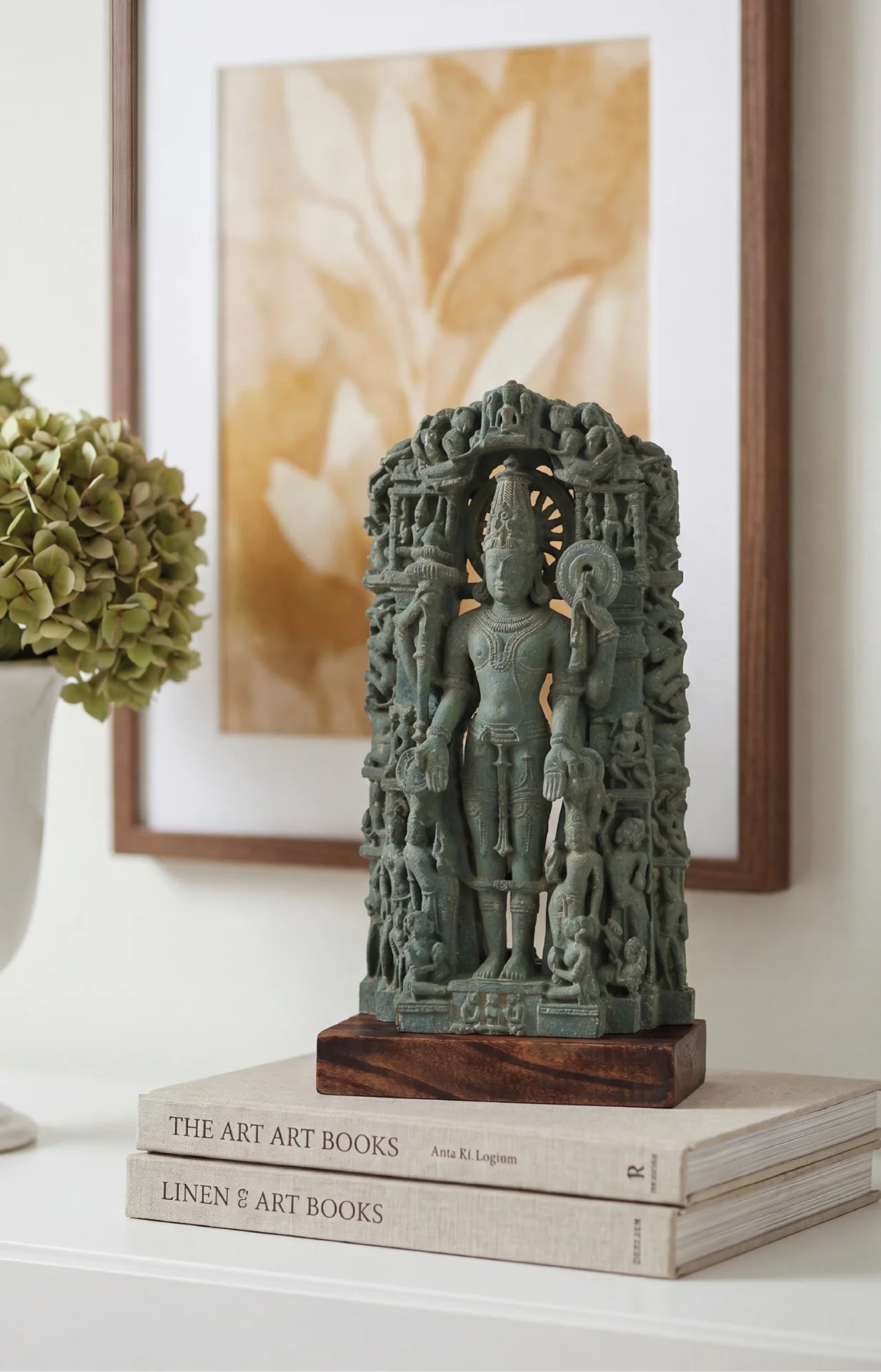
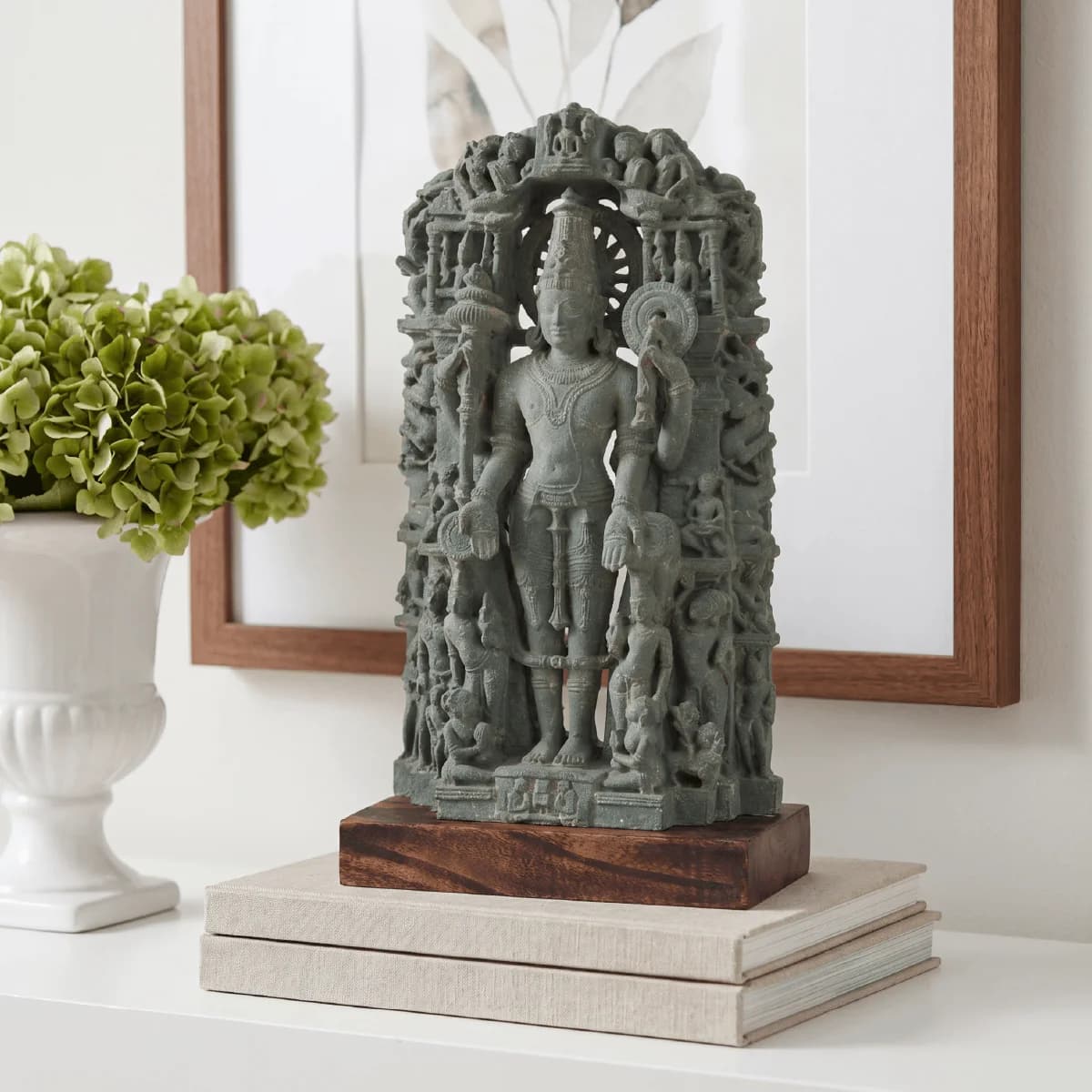
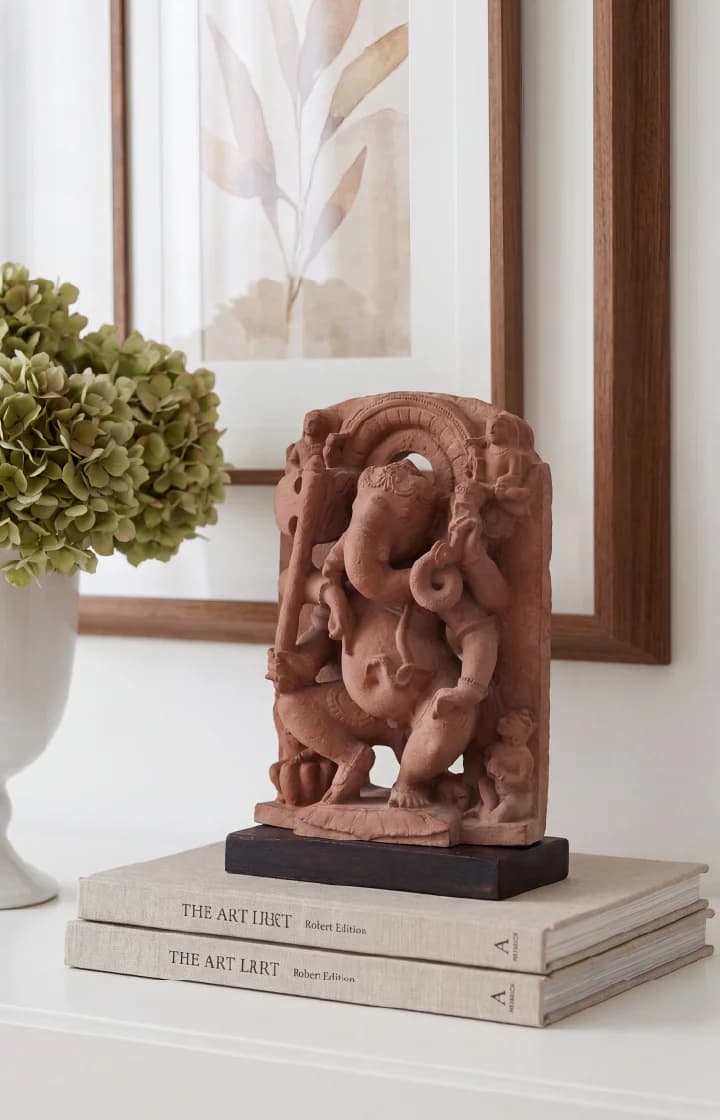
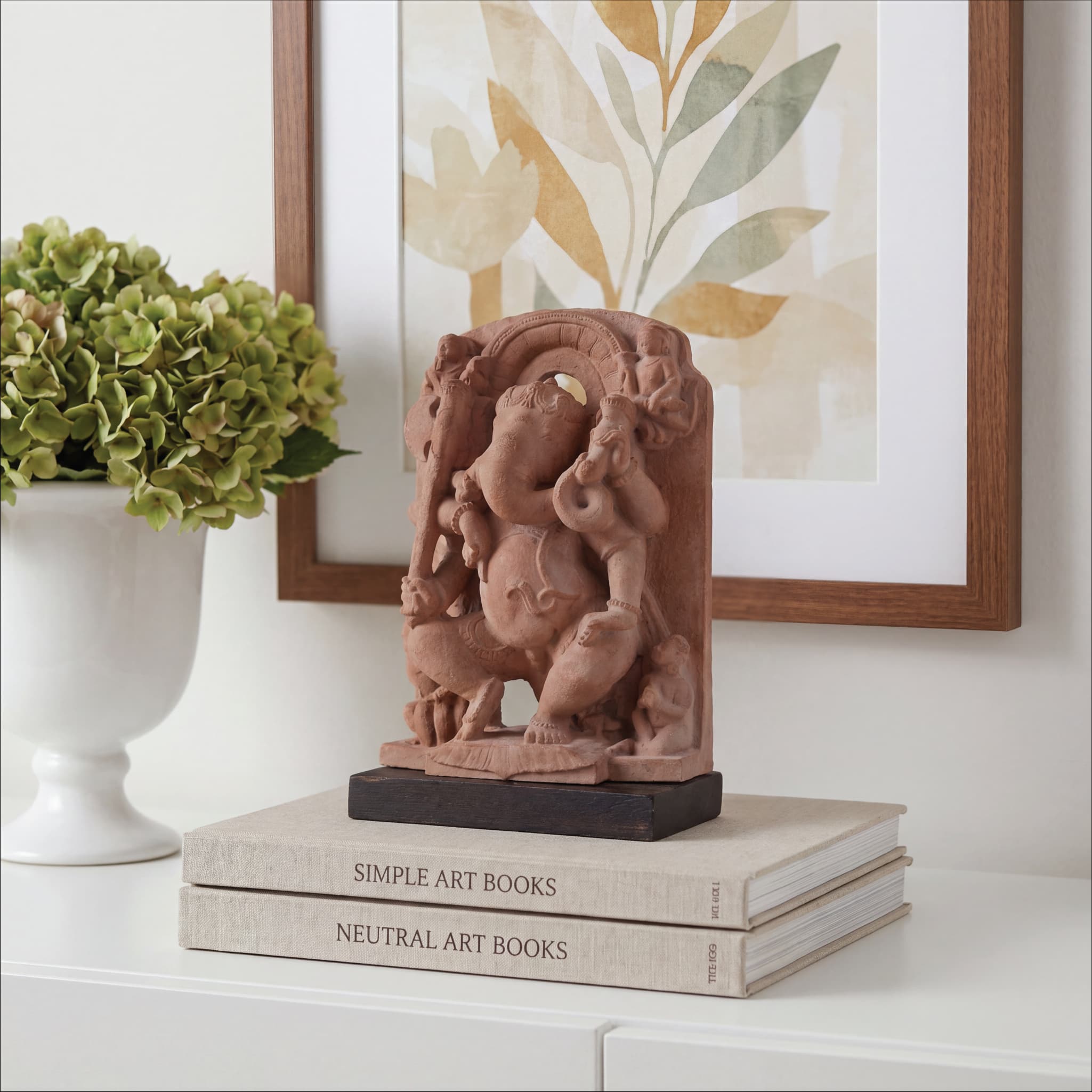
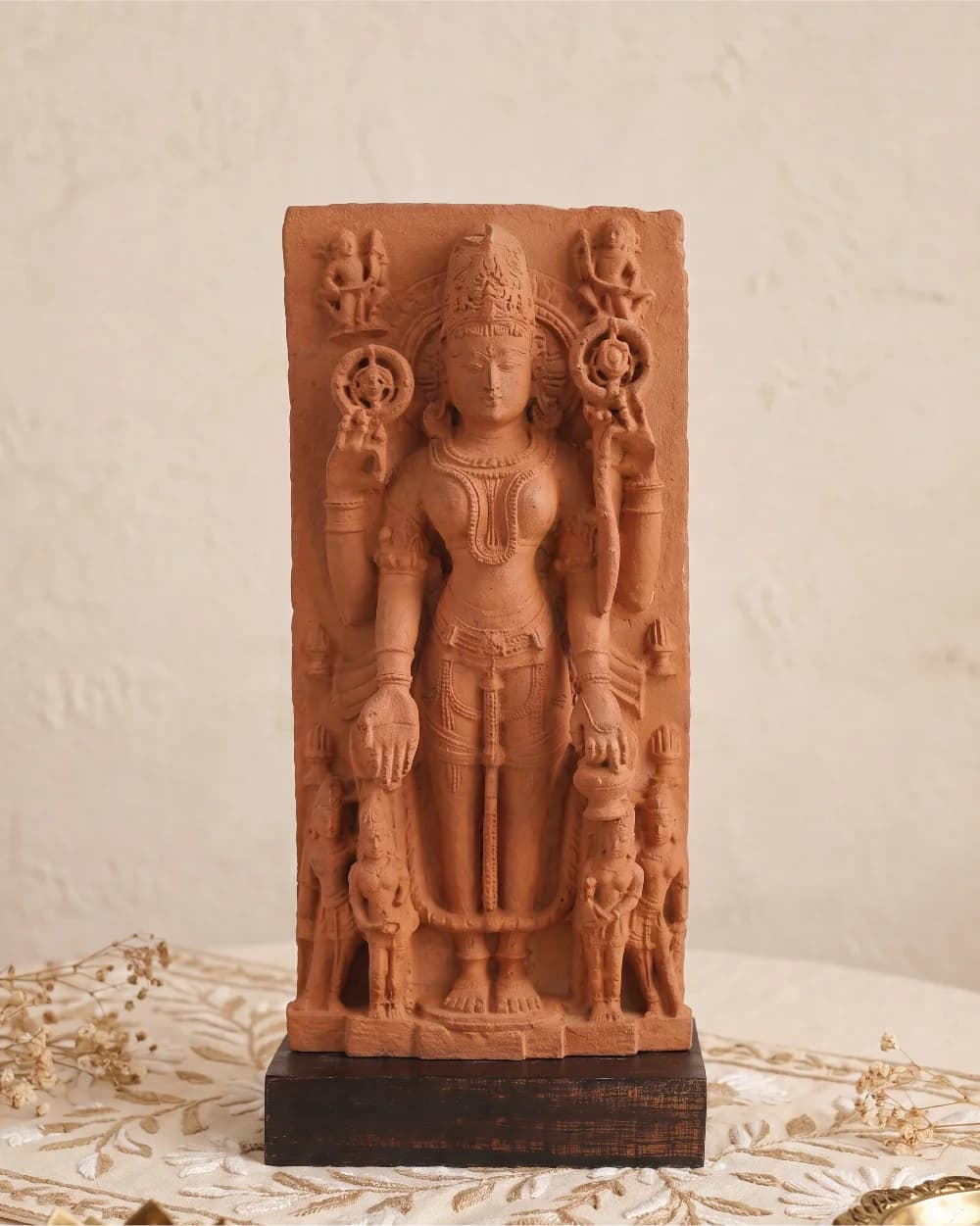
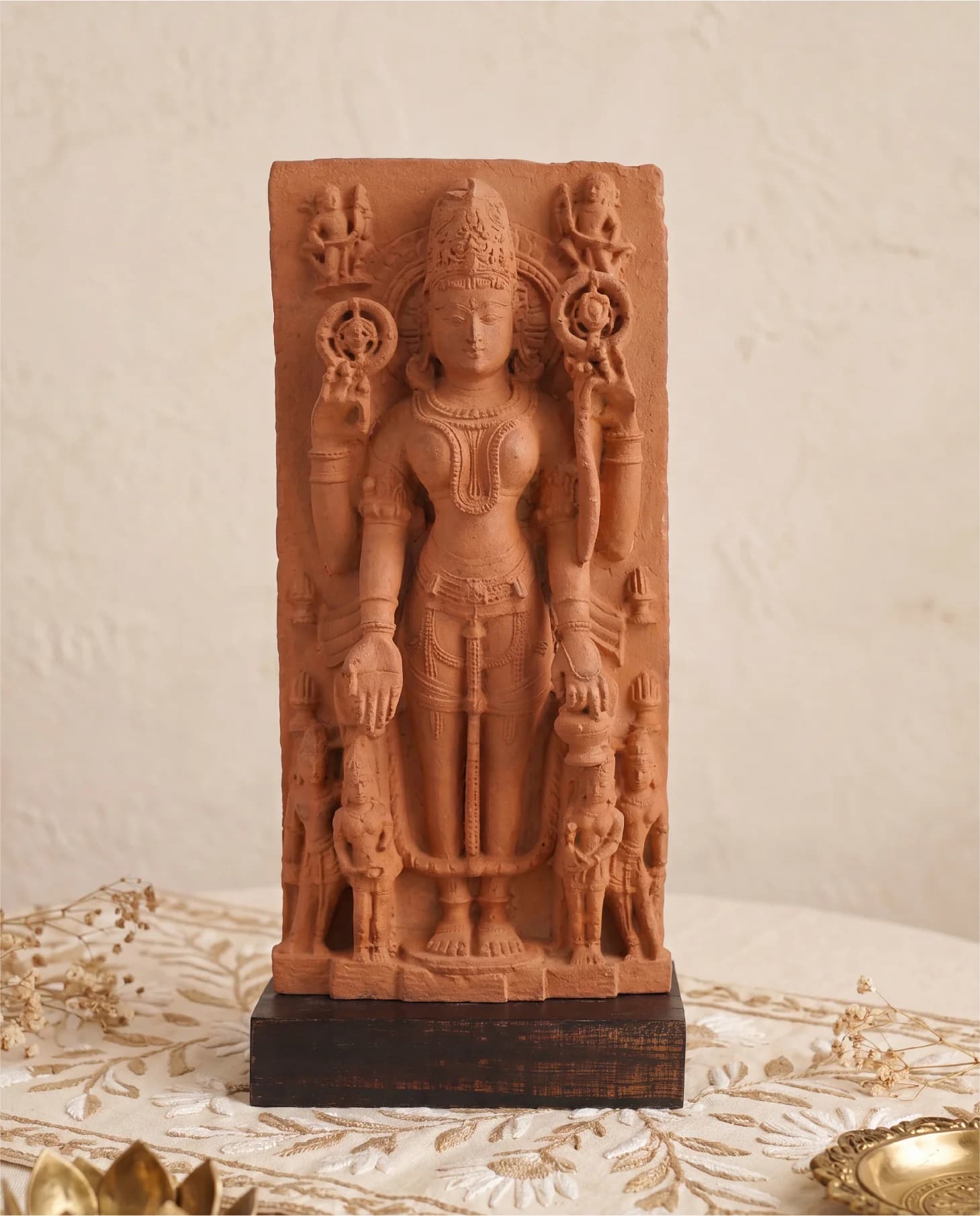
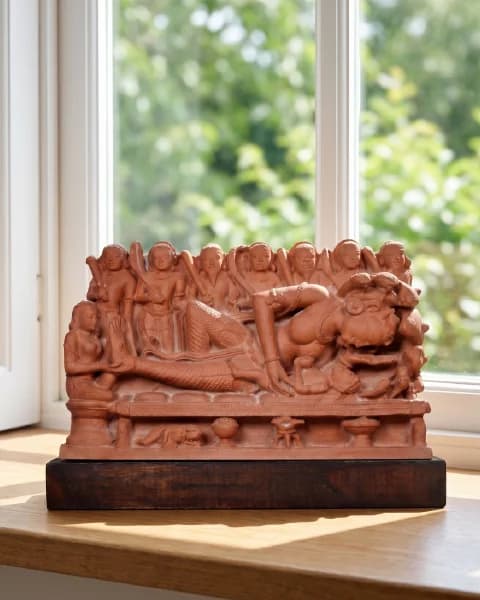
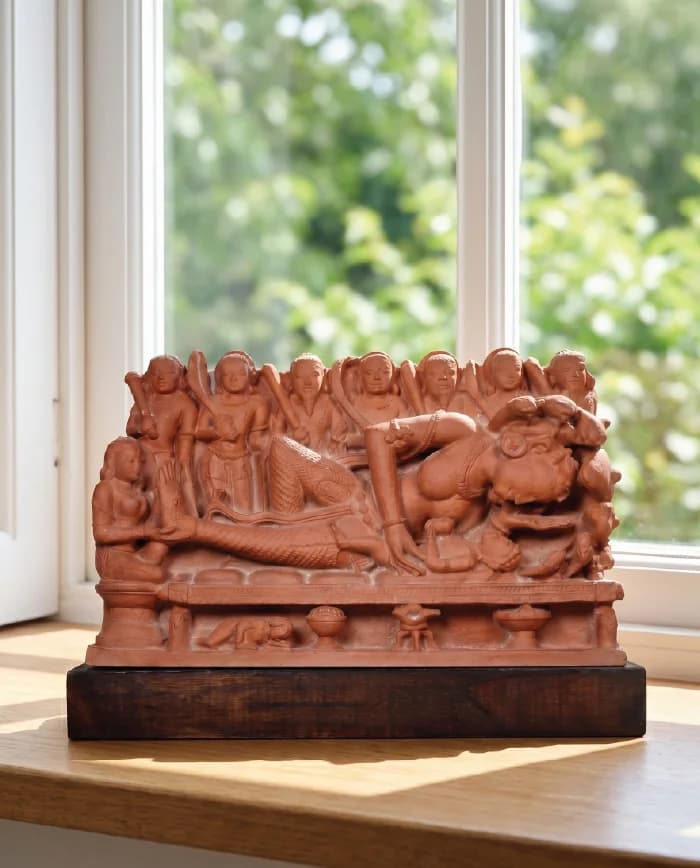
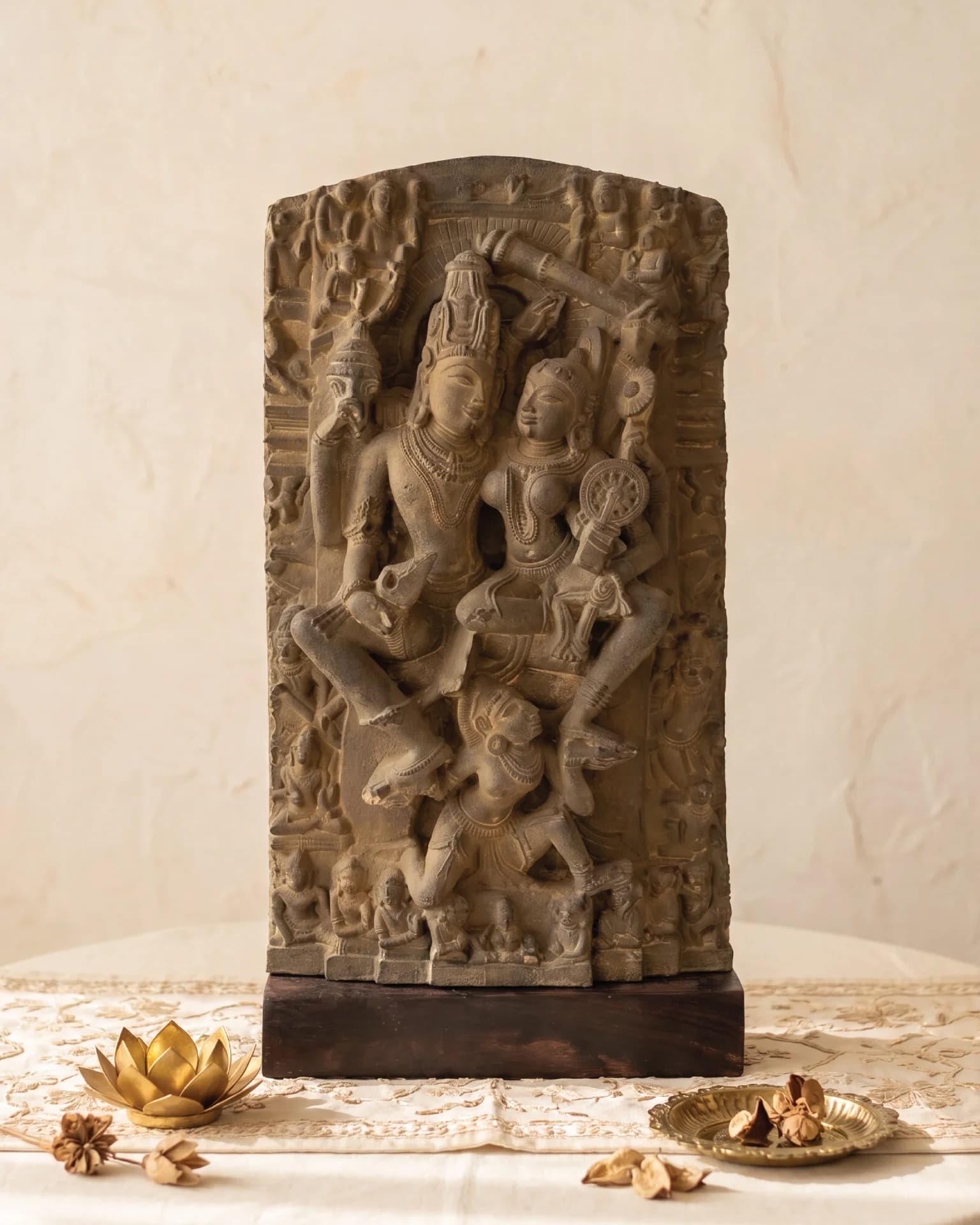
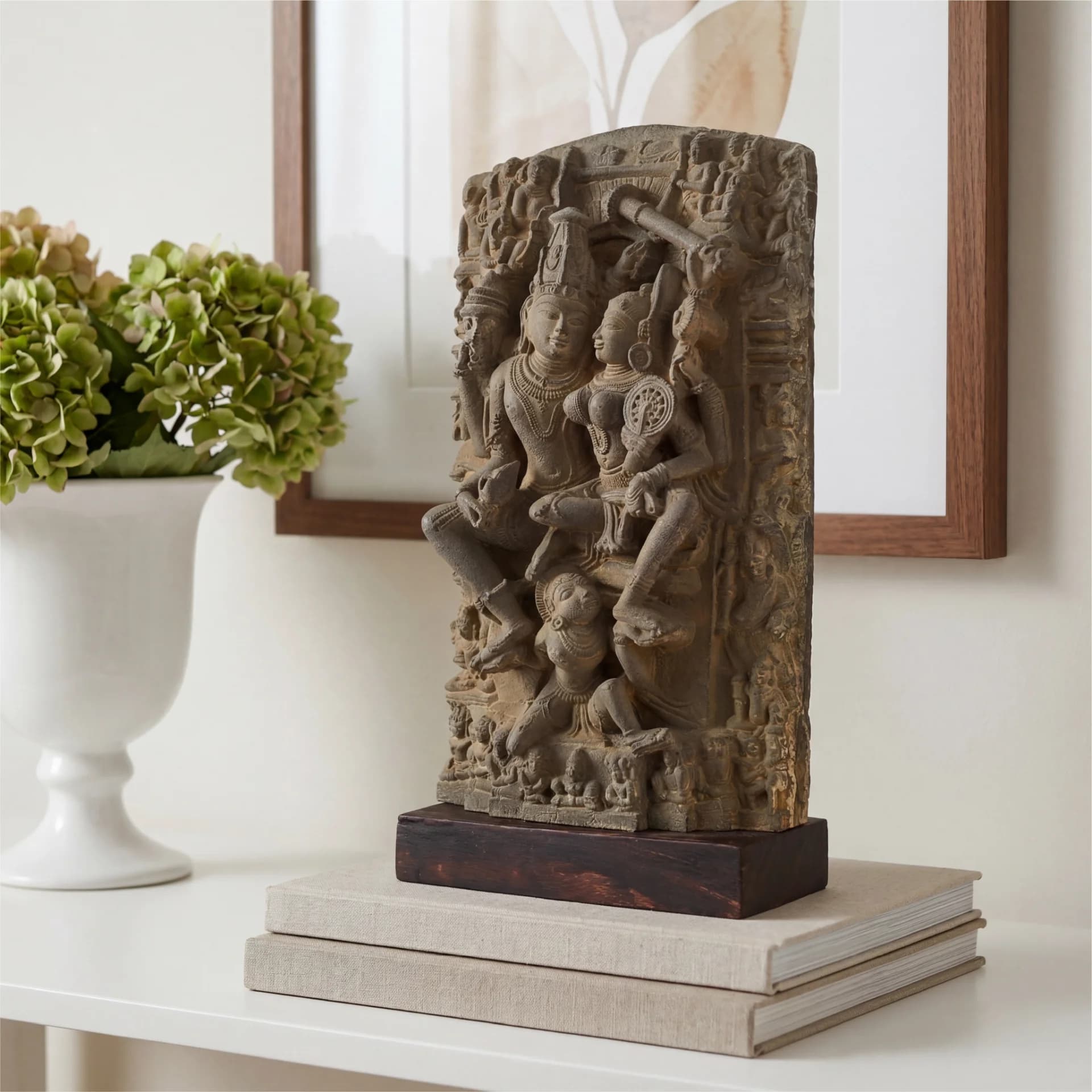
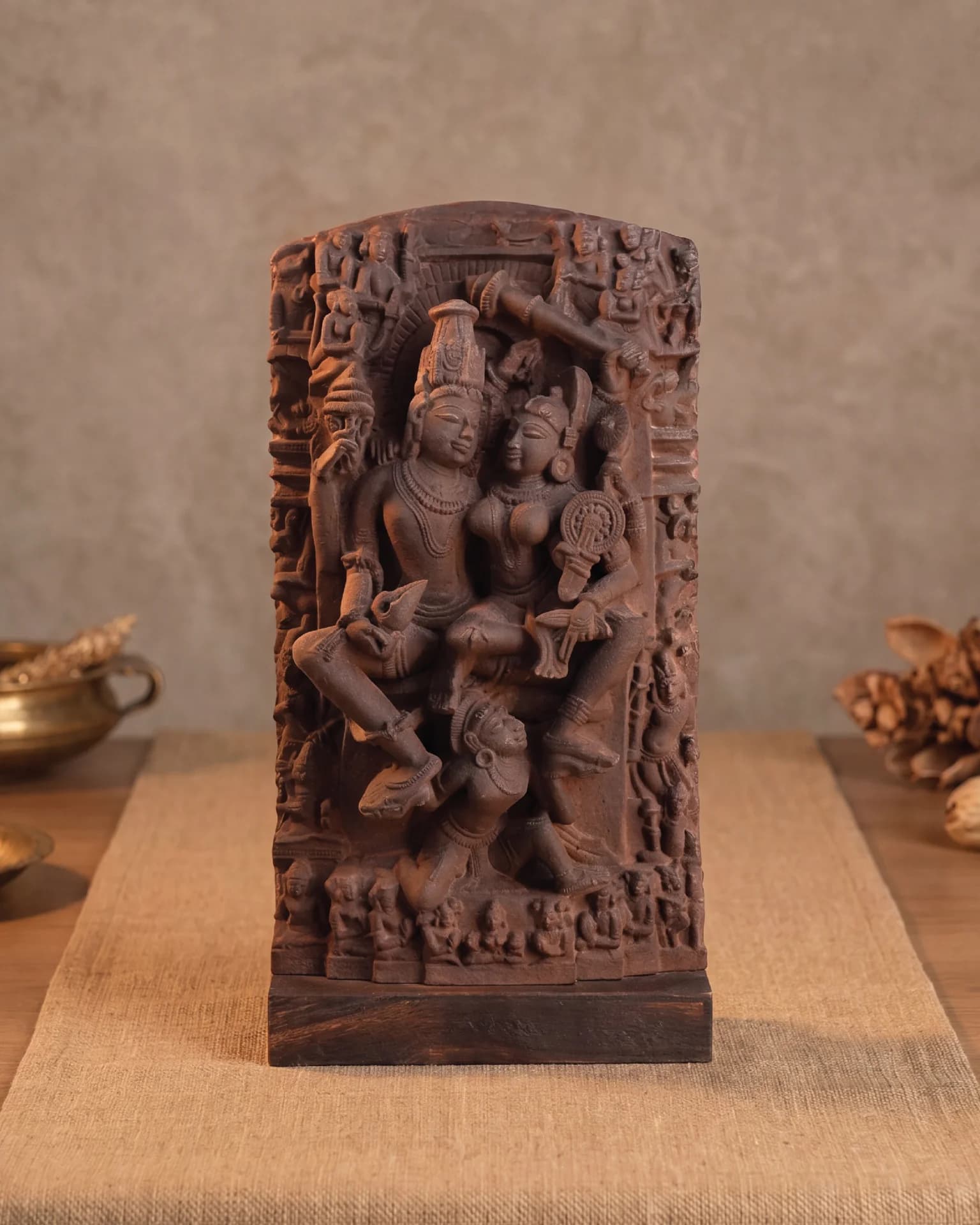
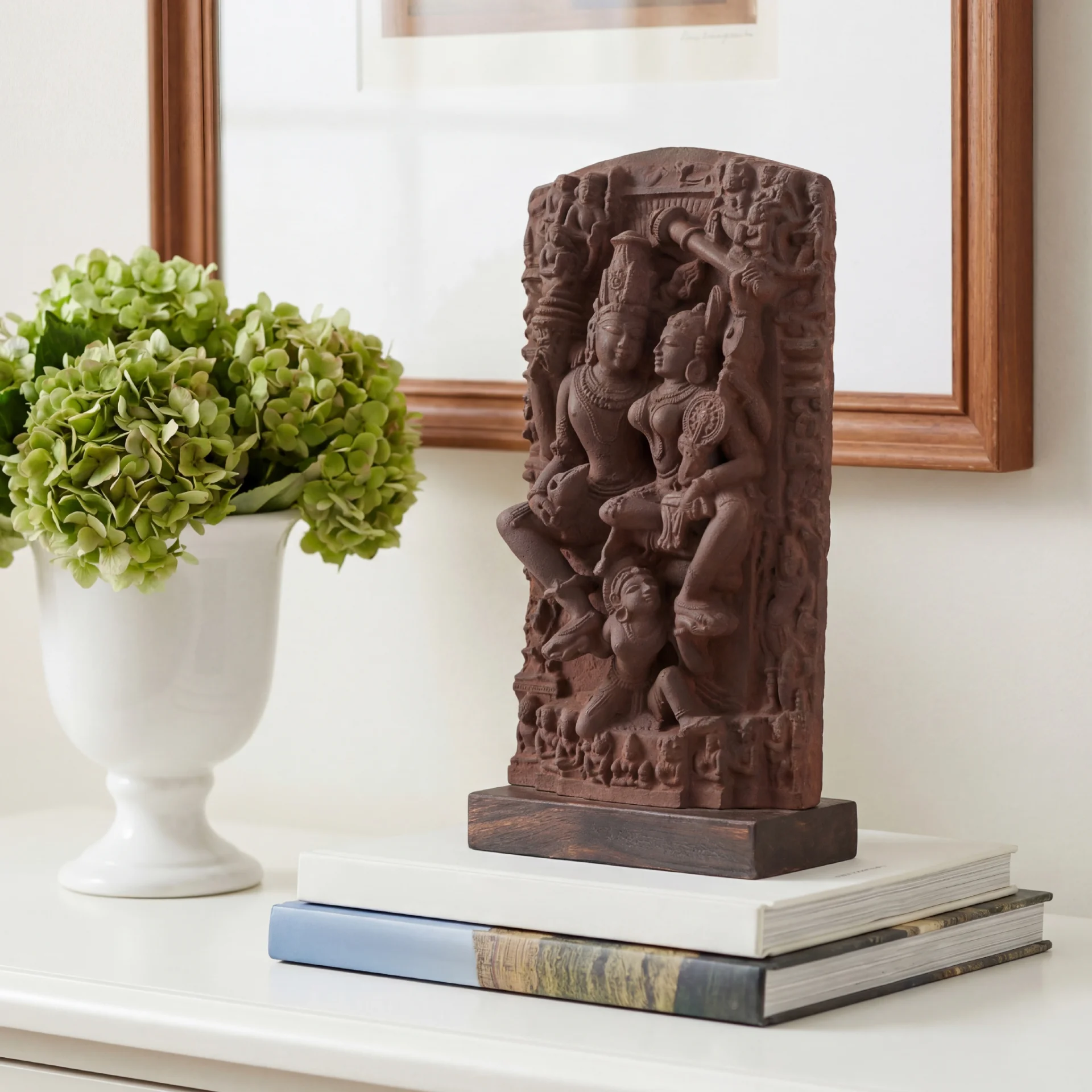
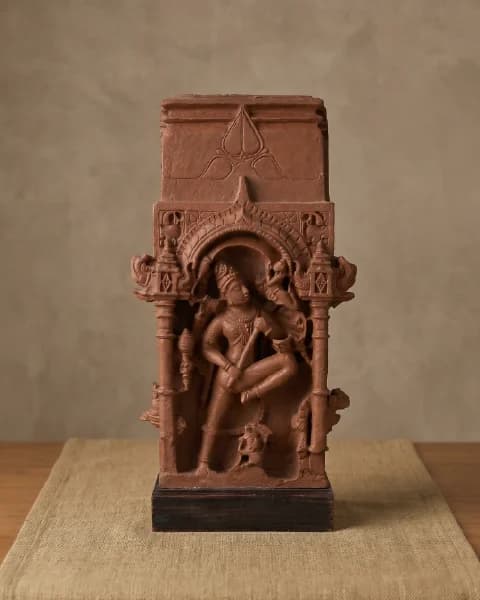
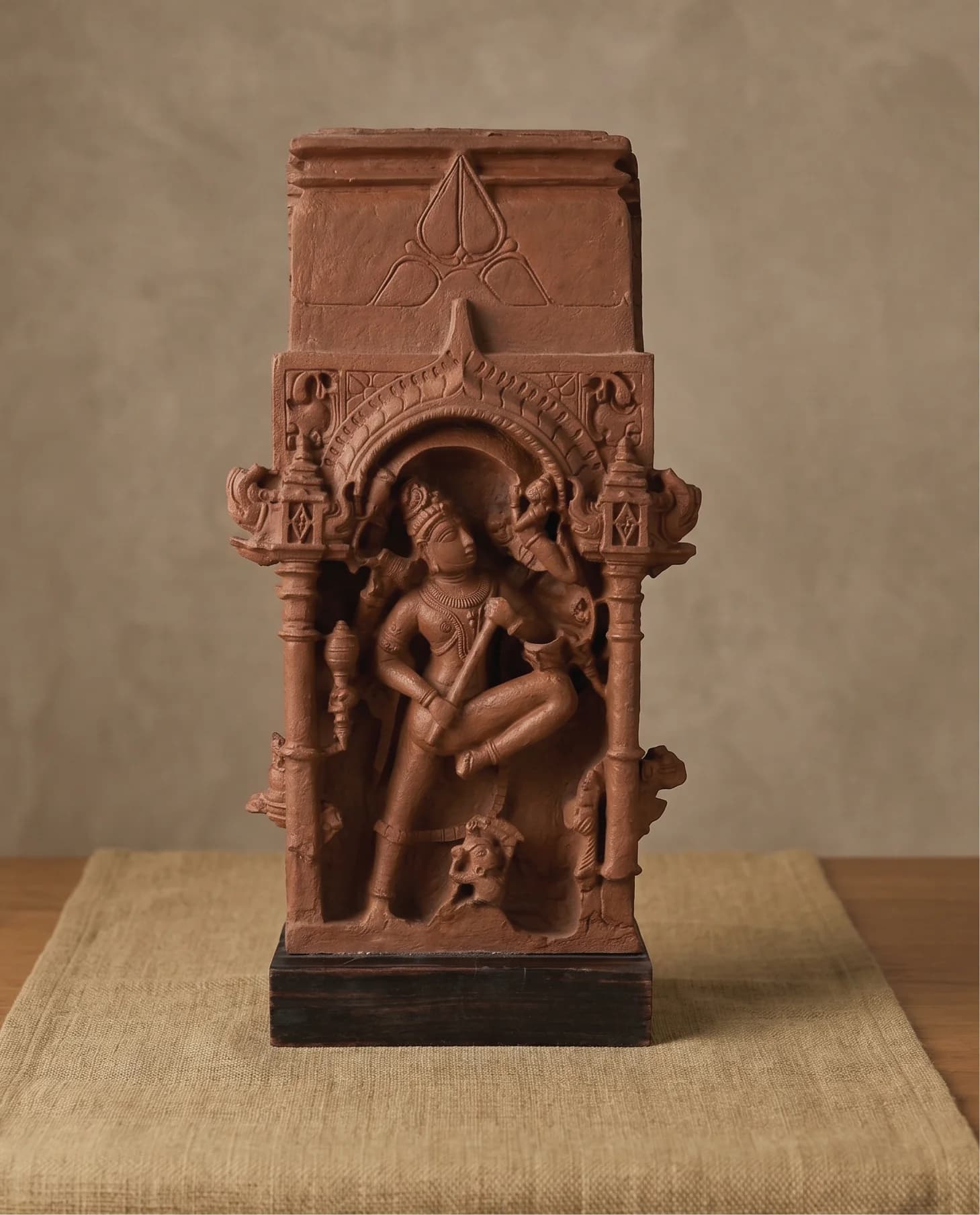
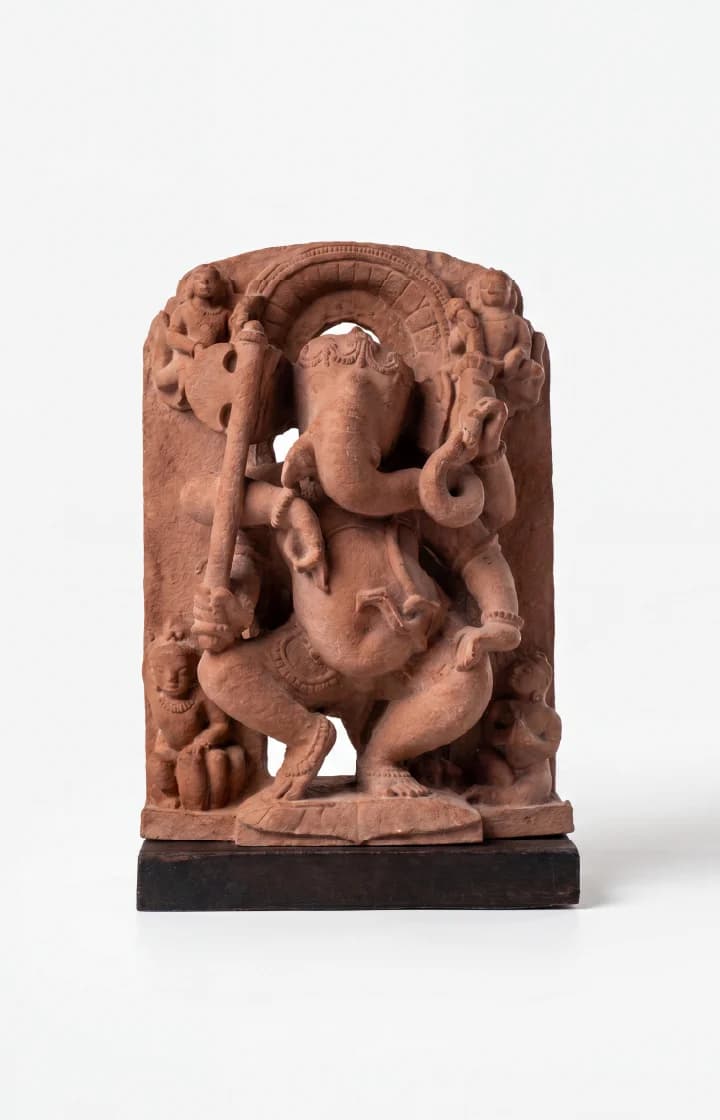
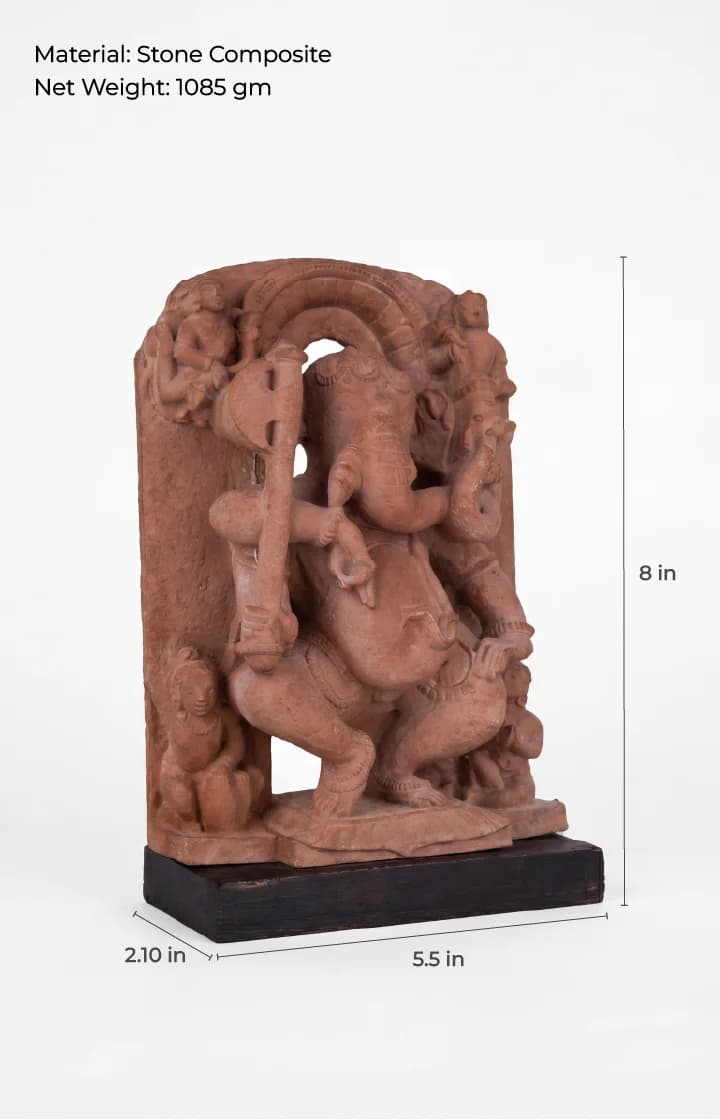
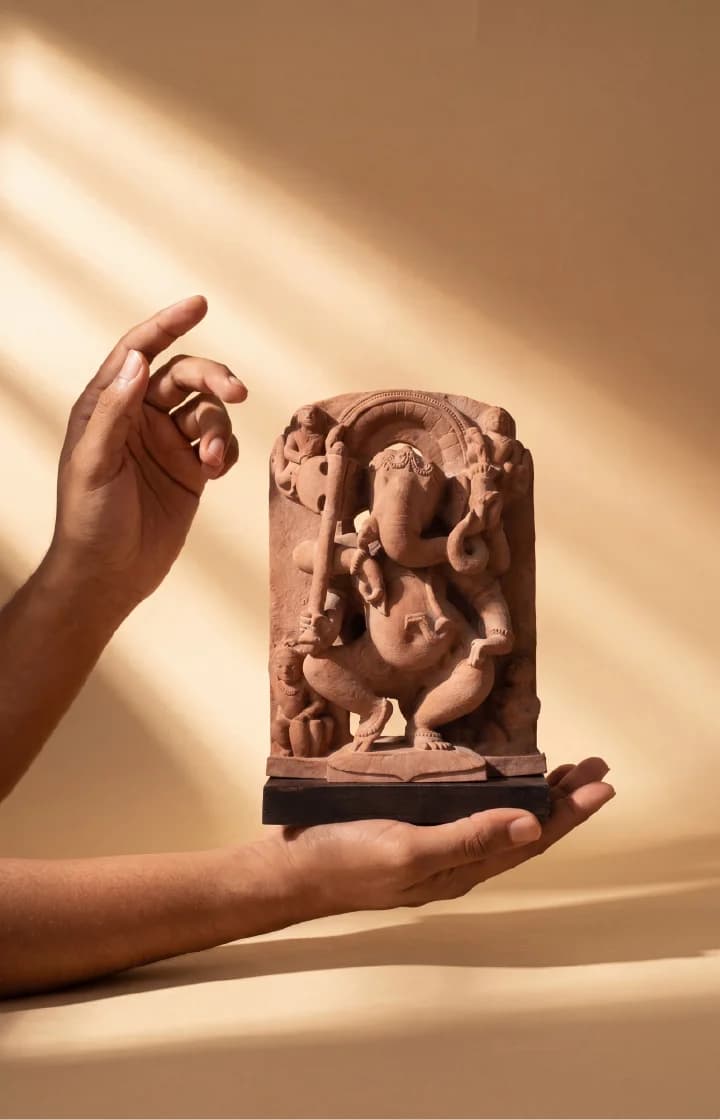
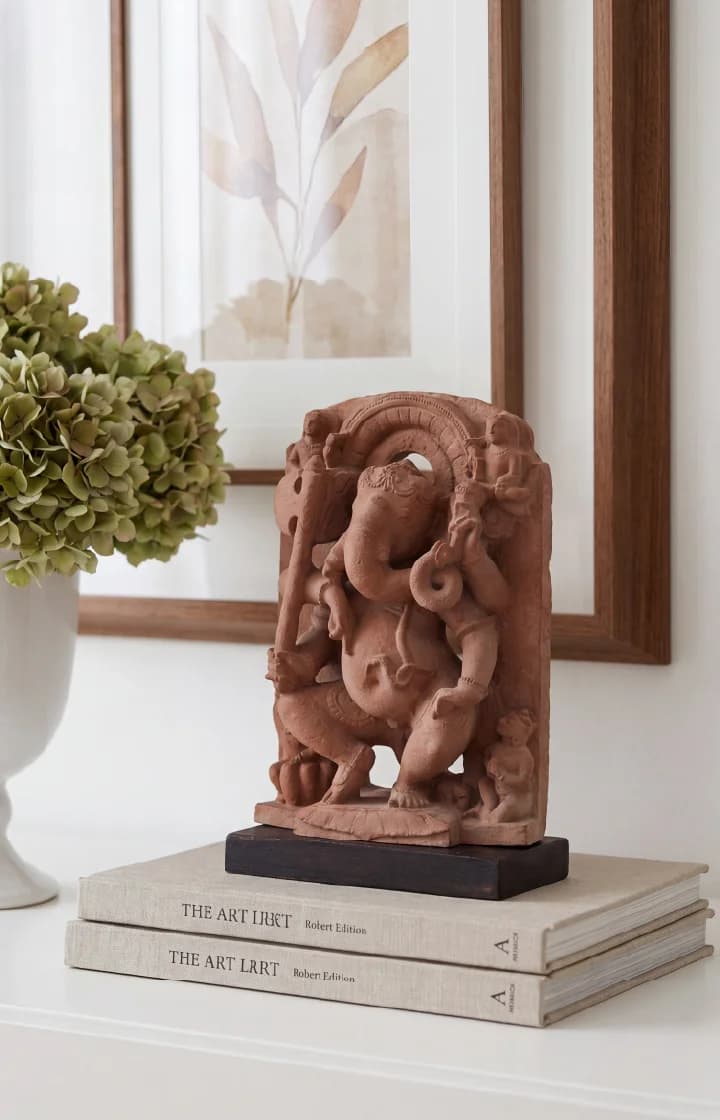
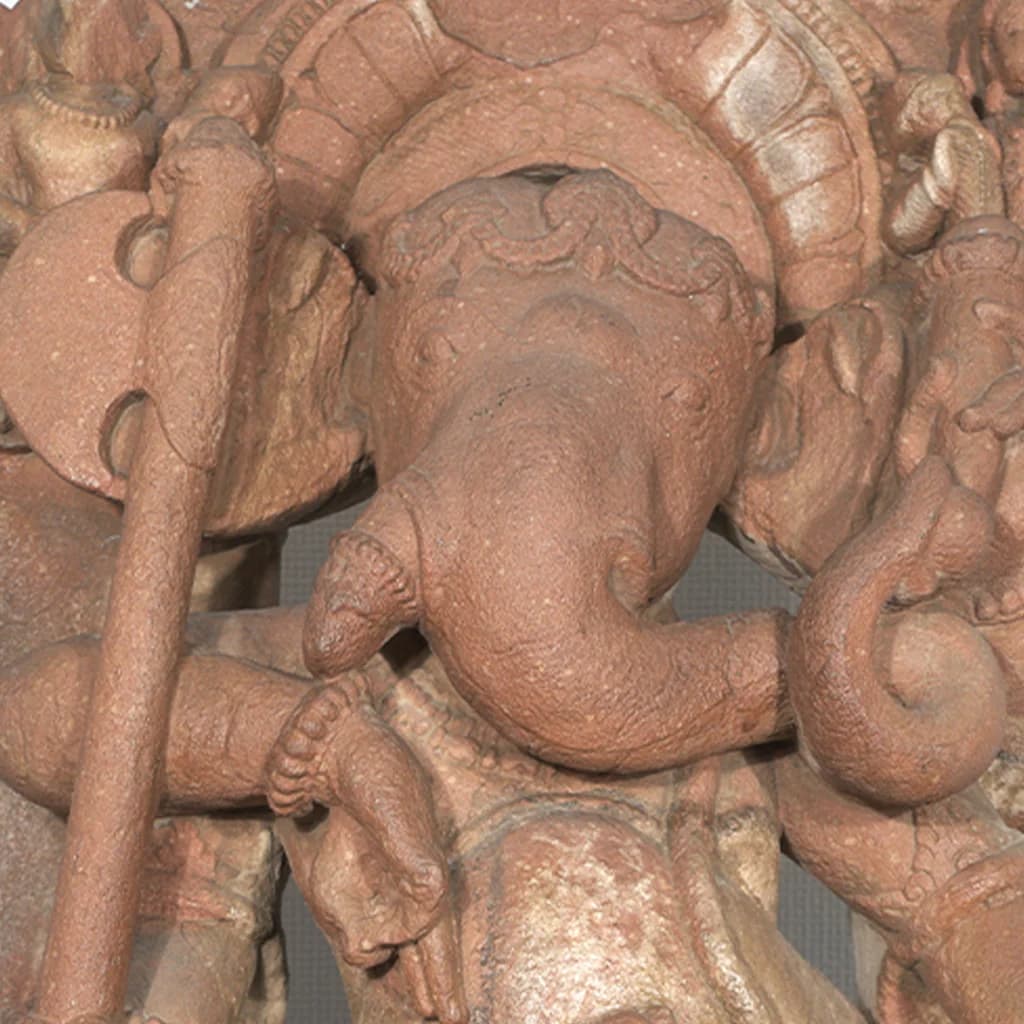
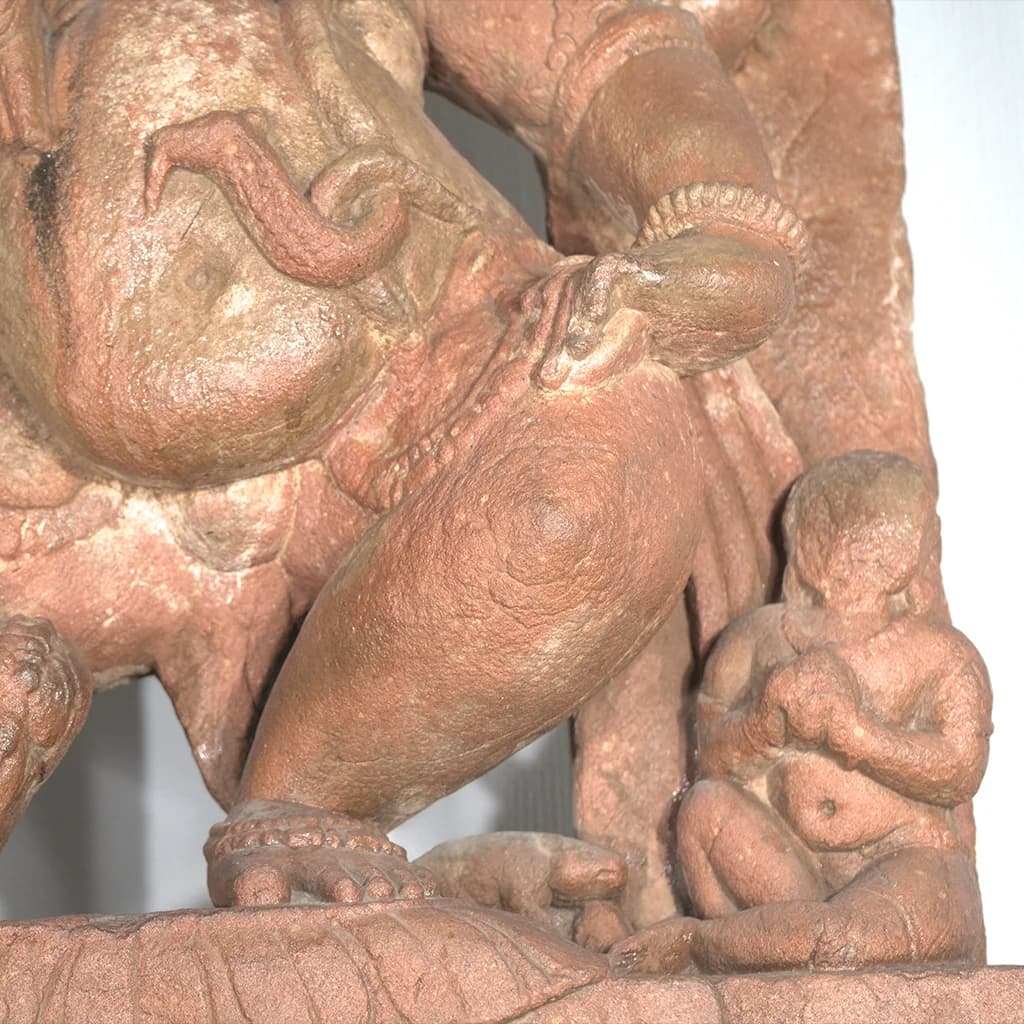
Ganesha holds a significant role in Indian mythology, as he is the son of Shiva and Parvati. He is often depicted in Shiva Parivar sculptures. The Rupamandana mentions the Ganesha sculpture and prescribes that he should be riding on a mouse, holding a dant, parshu, padma, and modak in his hands. The independent sculptures of Ganesha were produced in the medieval period, which signifies the popularity of Ganesha worship in contemporary society. Procured from Ashapuri, Raisen district, the sculpture of Ganesh exhibits him in a dancing posture. The attendants playing cymbals with the rhythm of the dance are noteworthy. The artist has successfully presented the propriety of dance and music in sculpture. The sculpture, dated to the 10th century AD, represents the art of the transitional phase of Pratihara-Parmara art in the region. The earliest depictions of dancing Ganesha date back to the 6th century. By the 10th century, he was often carved on the exterior walls of temples, particularly in central India.
Reviews
Nilesh J
Verified Purchase
about 1 month ago
I didn't know this story until recently. Owning the Ganesha made me look up the dancing Ganesha flanked by attendants playing cymbals properly for the first time. I loved uncovering the symbolism in these pieces. It rewards anyone willing to look up the iconography. A purchase that doubled as an education.
Vibhuti M
Verified Purchase
about 1 month ago
I came to the site for something else entirely. Something about the Ganesha, especially the fine Pratihara-Parmara line of the carving, wouldn't let go. No regrets about the detour.
Prasun R
Verified Purchase
about 2 months ago
Very nice piece. It is even better than what I was expecting.
Nilesh J
Verified Purchase
about 1 month ago
I didn't know this story until recently. Owning the Ganesha made me look up the dancing Ganesha flanked by attendants playing cymbals properly for the first time. I loved uncovering the symbolism in these pieces. It rewards anyone willing to look up the iconography. A purchase that doubled as an education.
Vibhuti M
Verified Purchase
about 1 month ago
I came to the site for something else entirely. Something about the Ganesha, especially the fine Pratihara-Parmara line of the carving, wouldn't let go. No regrets about the detour.
Prasun R
Verified Purchase
about 2 months ago
Very nice piece. It is even better than what I was expecting.